
50 years of Hip Hop (nineteen articles to chronicle a culture)
On August 11, 1973, hip hop was born in New York City, marking the inception of a cultural phenomenon that most spread the music and traditions of the African American community worldwide. To celebrate the fiftieth anniversary of this event, we have assembled a special issue featuring nineteen contributors including journalists, rappers, and devotees of the genre.
1. It’s the Motorcity, babe (Detroit, 1996 - 2006)
by Cesare Alemanni
In 1879, a 16-year-old boy who grew up on a farm in Springswell, Michigan, arrived in Detroit. He didn’t have much money in his pocket but had a remarkable sense for mechanics. At the age of twelve, his father had given him a pocket watch and he had taken it apart to study its gears. It was because of this talent that the young man, not even of age, later became one of the most influential figures of the twentieth century.
The 16-year-old boy's name was Henry Ford, and he was destined to found Ford, one of the world's largest automobile companies. In some ways it is THE automaker par excellence, since it is Ford itself, and Henry Ford, who is credited with the paternity of the subcompact car (with the 1908 Model T), that is the first truly "mass-market" automobile, capable of profoundly transforming twentieth-century consumer society.
Why, you may be wondering, am I mentioning Henry Ford in a magazine dedicated to rap's birthday? Well, because in order to understand where Detroit rap (which is the subject of this article) comes from, we must first grasp what kind of city Detroit is, and there's no better way of doing that than starting with cars. For much of the twentieth century, Detroit was indeed the capital of the American (and, by extension, Western) automobile industry. Not only because of Ford, but also because of brands such as Chrysler, GM and so on. It is not, after all, nicknamed Motor City by accident.
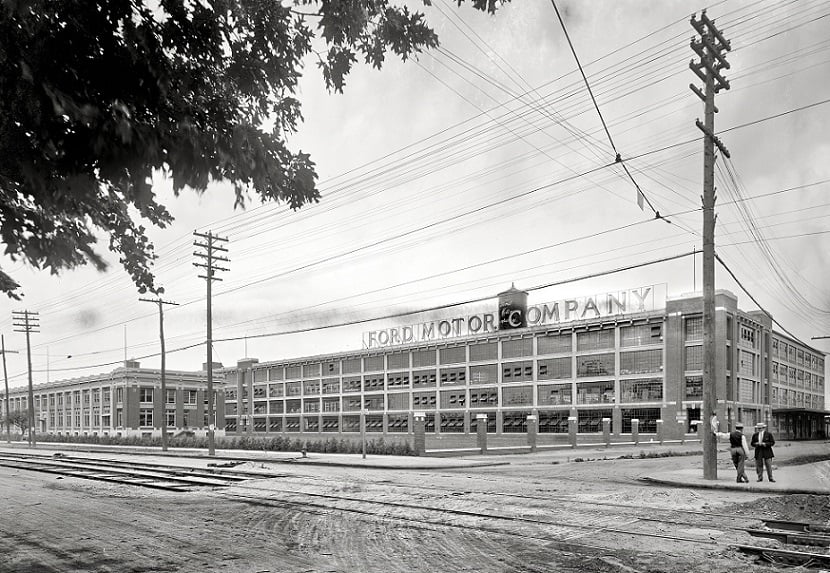
By virtue of its industries, for decades Detroit attracted hundreds of thousands of industrial workers - those known as blue collar in America and tute blu in Italy. A great mass of internal migrants that, beginning in the late nineteenth century, poured into Michigan's chilly capital city, lured by the promise of a secure (and initially quite well-paying) job. Many of them were, inevitably, African Americans fleeing discrimination in the Southern States (though discrimination was certainly present in Detroit as well, with Henry Ford himself being openly racist).
As a result of this phenomenon, at the turn of the postwar period Detroit had become the Midwest's premier Black Mecca. A metropolis characterized by an extended working class that was highly multiethnic and had a level of economic prosperity that, elsewhere, minorities simply did not possess. In the early 1950s, in Detroit's working-class neighborhoods - those with a large black majority - life began to pulse with two major soundtracks. On the one hand, the martial, repetitive rhythm of the assembly line; on the other, the vibrant sounds of jazz clubs, where the vast community of workers, African-American and otherwise, would gather to shake off the tedium of their factory days.
Acquista ora THIS IS AMERICA, il primo volume cartaceo di oltreoceano.
Più di 200 pagine dedicate alla storia e alla cultura della comunità Afro-americana. Sostieni oltreoceano, sostieni il giornalismo indipendente.
A number of great jazz musicians emerged from that scene, most notably Yusef Lateef, but above all it was a young African American named Berry Gordy - a Korean War veteran who, after unsuccessfully trying his hand at boxing, had ended up working right at Ford - who began to take his first steps in music truly grasping, better than anyone else, the essence of Detroit's socio cultural situation. That is, the presence of a large mass of industrial workers who felt particularly alienated, and therefore were particularly in need of songs that could entertain them above all.Beginning in the late 1950s, Gordy built out of this intuition a sound that emphasized the more "pop" characteristics of soul, jazz, funk and rock and roll within tracks designed specifically to satisfy that audience's desire for entertainment.Gordy's early productions were an immediate and resounding success. And more. In deference to the city's industrial tradition, Gordy decided to serialize them and make them a true entrepreneurial "trademark." Thus was born Motown, one of the most influential record labels of the 20th century, and arguably one of the three most important black music labels in history (the other two being Blue Note and Def Jam). And it could not…