
Sonic Diaspora: On Techno's Roots and Evolution
Detroit wasn’t just a city: it was an idea of America. It was the place where technology married utopia, where every single engine produced seemed to move not just four wheels, but an entire social system. When deindustrialization hit and the social system faltered, Detroit did not stop being a symbol. It just changed the kind of symbol it represented: from capital of industry to epicentre of urban collapse, from manifesto of emancipation to portrait of disillusionment.
In the late 1980s, something new emerged in that void: a new language, a new rhythm. Techno continued to speak of bodies and machines, of cities and memories, of Blackness and future. It continued to speak of Detroit and what happens when utopias reach the end of the line.
Ignored by the American music industry, Detroit techno gained recognition abroad. In post-reunification Berlin, it found an unexpected audience and a second home. The music evolved, but its Black, working-class origins stayed at its core.
1. The Birth of Techno in Post-Industrial Detroit
by Cesare Alemanni
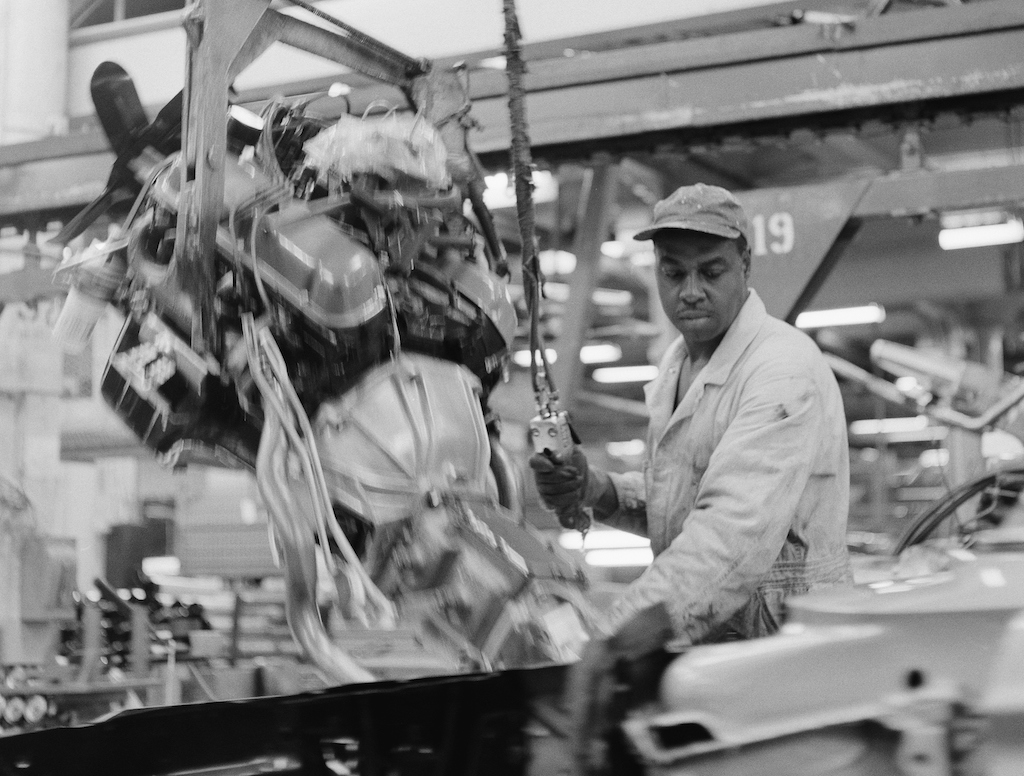
Detroit has long been the capital of the American industrial dream. Between the 1930s and the 1970s, in Detroit more than anywhere else the fordist synthesis of production and progress became flesh and metal: millions of cars from Ford, GM and Chrysler (the so-called “Big Three”) were mass-cranked out, whole neighbourhoods sprang up around the factories and the working class managed to get a foothold in the middle class. In its heyday, Detroit wasn’t just a city: it was an idea of America (and, osmotically, of the West). It was the place where technology married utopia, where every single engine produced seemed to move not just four wheels, but an entire social system.
Working on the assembly lines of the “Big Three” meant being able to afford a house, send the children to school, and climb a few rungs on the social ladder. For more than fifty years, thousands of African-American families arrived on the shores of Michigan from Southern cities, lured by the prospects of emancipation promised by the pact between capital and labour which underpinned the social and organisational dynamics of mass production.
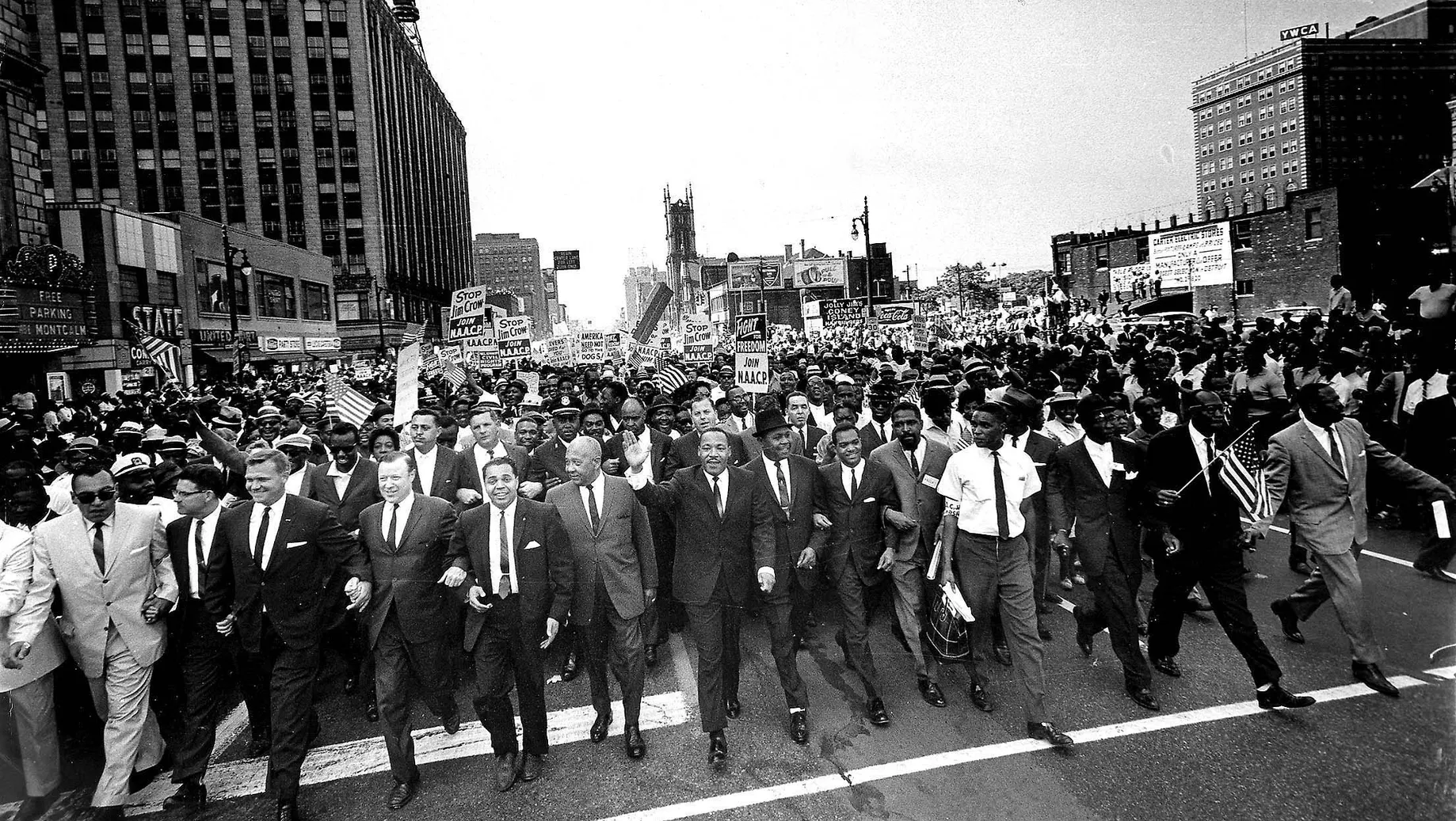
This pact, however, proved fragile. The 1973 oil crisis, runaway inflation, increasing automation and globalisation marked the beginning of a downward spiral that turned Detroit into a symbol of the decline of American industrial power.
The African-American community paid the highest price. As factories shut down, tens of thousands of jobs disappeared within a few years. Whole neighbourhoods, once vibrant, sank into silence. The tract houses that workers had bought on installments fell into disrepair. Schools emptied.
And, as the de-industrialisation carved a material void, federal policies helped to worsen the social one. During the 1980s, Kennedy and Johnson’s war on poverty gave way to Reagan’s “war on drugs”, which turned out to be largely a war on Black people. Detroit’s African-American neighbourhoods were increasingly conceived as areas to be contained, disciplined, and punished. Once an engine of integration, the city became a laboratory for economical, social and cultural segregation.
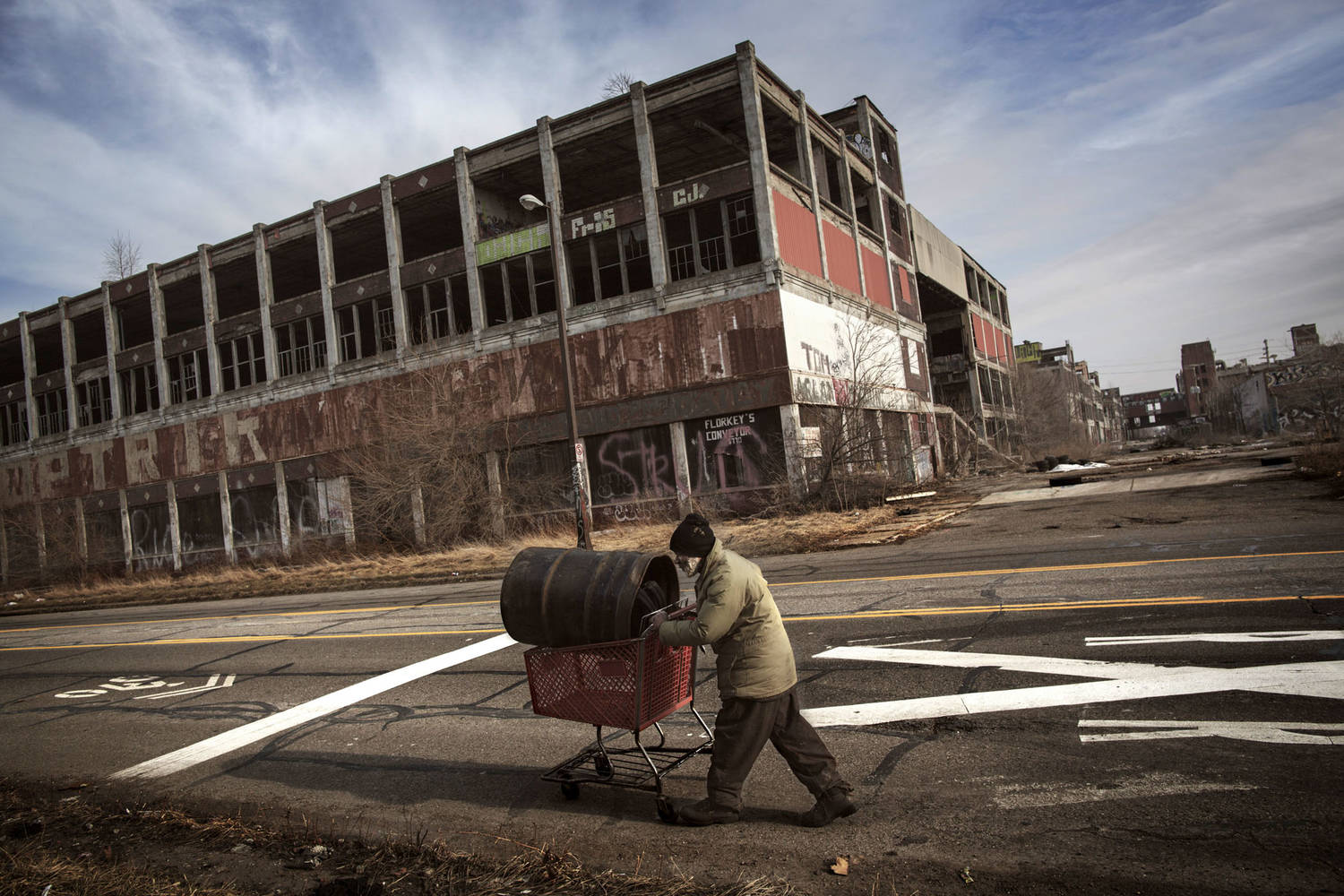
Detroit did not stop being a symbol. It just changed the kind of symbol it represented: from capital of industry to epicentre of urban collapse, from manifesto of emancipation to portrait of disillusionment. But in this - social, economical, existential - void, a new language, a new rhythm began to sprout in the late 1980s. No longer the clatter of presses, but a synthetic, alien pulse.
At a superficial glance, techno may appear to be simple, geometric, almost bare music. A regular, square rhythm built around a rhythmic grid that repeats endlessly: the famous “four-on-the-floor”, bass drum on every beat, snare drum or hi-hat on even accents. But within this basic structure lies a world. Like an assembly line that can adapt to new cars without changing the principle that drives it, techno is also infinitely adjustable. And it is precisely this ability to compose and decompose, to replicate and vary almost endlessly, that is its deepest DNA.
Techno sound is the child of assemblage, repetition and sequentiality. In this sense, it is structurally related to factory work, not only in its aesthetics - the metallic sounds, the cold lines, the rhythmic mechanics - but in the very logic of its construction. Every techno track is a sonic assembly line, a production process that turns time into loop, noise into rhythm, monotony into trance.
But techno was born not just out of the factory, but out of the hybridisation of seemingly irreconcilable musical worlds and imagery. Its pioneers - Juan Atkins, Derrick May and Kevin Saunderson: “The Belleville Three” - were young African Americans shaped by listening to the late-night broadcasts of The Electrifying Mojo, a visionary DJ who played Aretha Franklin and the B-52’s, David Bowie and the Funkadelic, Herbie Hancock and Kraftwerk’s icy electronica, Motown soul and the Throbbing Gristle on Detroit’s public radio frequencies, without hierarchy or barriers. In the mid-1980s, Mojo wasn’t just a DJ: he was a bridge between worlds.Meanwhile, the proximity of Chicago provided other stimuli. Through syncopated reworking of disco hits, gay African-American DJs like Frankie Knuckles gave birth to House music, a pulsating and highly erotic sound that began to circulate…