
Is Grime Part of Hip Hop? Tracing the Cultural Lineages Between Grime, Hip-Hop, and Black British Music
Grime did not emerge in a vacuum. Born in the estates of London, it carries echoes of hip hop, sound system culture, jungle, and Black British social reality. But where does grime sit within the broader Black Atlantic musical tradition, and can it be considered part of hip hop’s extended family?
The question of whether grime belongs to hip hop is not simply a matter of genre classification. It is a question about cultural lineage, power, and recognition: who gets to define hip hop, whose histories are legitimised within it, and how Black diasporic cultures travel, transform, and root themselves in different national contexts. Asking whether grime is “part of” hip hop means interrogating how Black British cultural production has been positioned in relation to African American traditions, both within Britain and on a global stage.
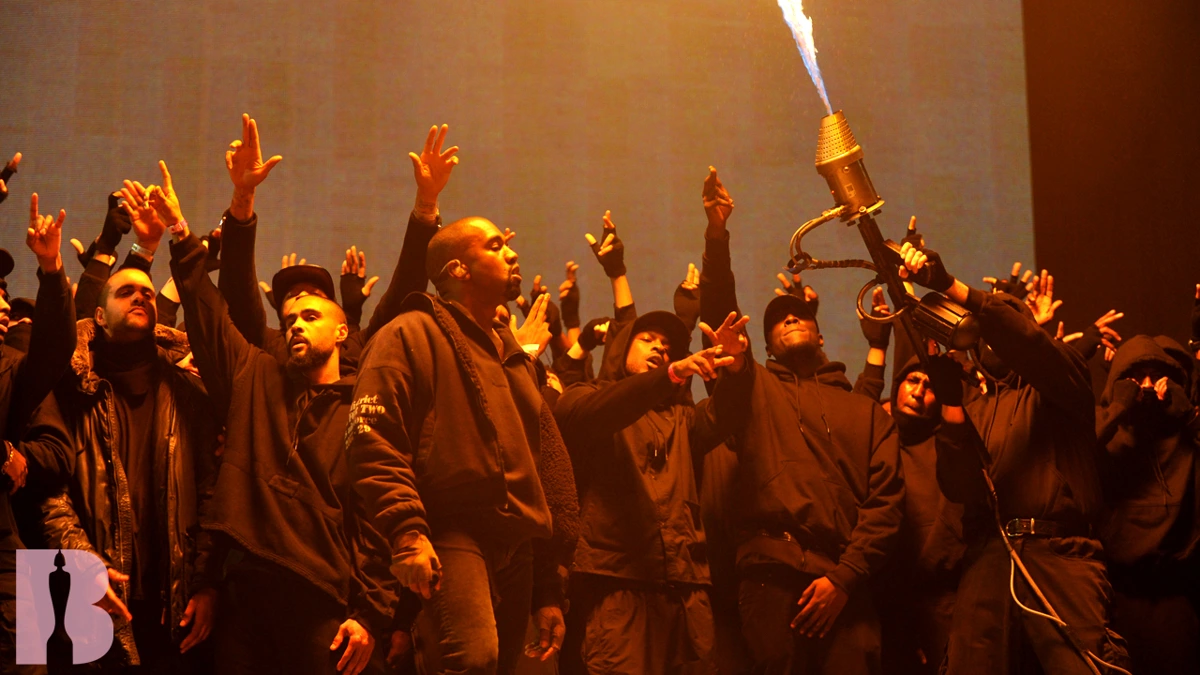
At the 2015 BRIT Awards, as he premiered his track All Day, Kanye West was flanked by what resembled a Greek chorus: more than forty men dressed in black tracksuits and hoodies. Among them, attentive viewers quickly recognised some of the most prominent figures in UK rap and grime at the time—Skepta, Jammer, Shorty, Krept and Konan, Novelist, Stormzy, and Fekky. For many, the moment felt celebratory: a symbolic takeover of one of Britain’s most prestigious stages by artists from a scene that had long been overlooked, marginalised, or softened by the British music industry. Yet the irony was unmistakable. None of those MCs would likely have been granted access to that stage on their own terms. The performance underscored a long-standing belief that British music operates far from a meritocracy, and that hip hop—and Black music more broadly—has historically found greater recognition and opportunity in the United States than in the UK. The scene’s visibility was mediated, authorised, and framed through an American superstar highlighting how proximity to U.S. hip hop has often functioned as a gatekeeping mechanism for Black British music.
A decade later, the cultural landscape appears fundamentally altered. Black British culture, and UK rap more broadly, has reached an unprecedented level of global visibility and influence. Artists such as Central Cee now rank among the most influential rappers worldwide, potentially marking a historic shift in the global narrative of hip hop. Drill has evolved into one of the most widely circulated rap genres internationally, while figures like Slawn have emerged as key protagonists within global urban culture. This transformation reveals much about changing power relations in the consumption of popular culture, particularly within rap music, and about evolving perceptions of Blackness on a global stage.
Yet this newfound visibility raises unresolved questions. Does global recognition translate into cultural autonomy, or does it risk flattening local histories into a broader, market-friendly idea of hip hop? And what happens to genres like grime, whose roots are deeply tied to specific Black British social and sonic conditions, when they circulate globally under the label of “rap”?
Despite this global reach, British rap—and grime in particular—remains an autochthonous musical form. It emerged from the specific historical and social experiences of Black communities in Britain, shaped by local cultural practices and sustained through ongoing dialogue with other Afro-diasporic traditions. Central to its development has been a continuous exchange with both African American and Caribbean cultural worlds. But not subordinated to it.
Understanding these dynamics requires listening not only to the music itself, but to the social worlds, migrations, and everyday lives that produced it. These continuities, frictions, and cross-pollinations are examined through the work of Aniefiok Ekpoudom, a writer and journalist from South London who documents the voices and communities of contemporary Britain. His book Where We Come From: Rap, Home and Hope in Modern Britain, published by Faber & Faber in 2024, offers a social history of British rap that situates the genre at the intersection of music, migration, class, and Black British identity.
How has the growing global visibility of UK rap reshaped the way Black British culture is perceived, both at home and internationally?“I’d say the turning point was around 2015. Just before that, you could really feel momentum building in the UK, especially around grime. Grime was one of the first movements to push Black British music closer to the mainstream. Even then, though, these genres were still largely underground. That moment felt like the first major eruption of Black British music and MC culture into the heart of mainstream British culture. What made it especially striking was the amount of resistance and pushback it faced—something that’s been…